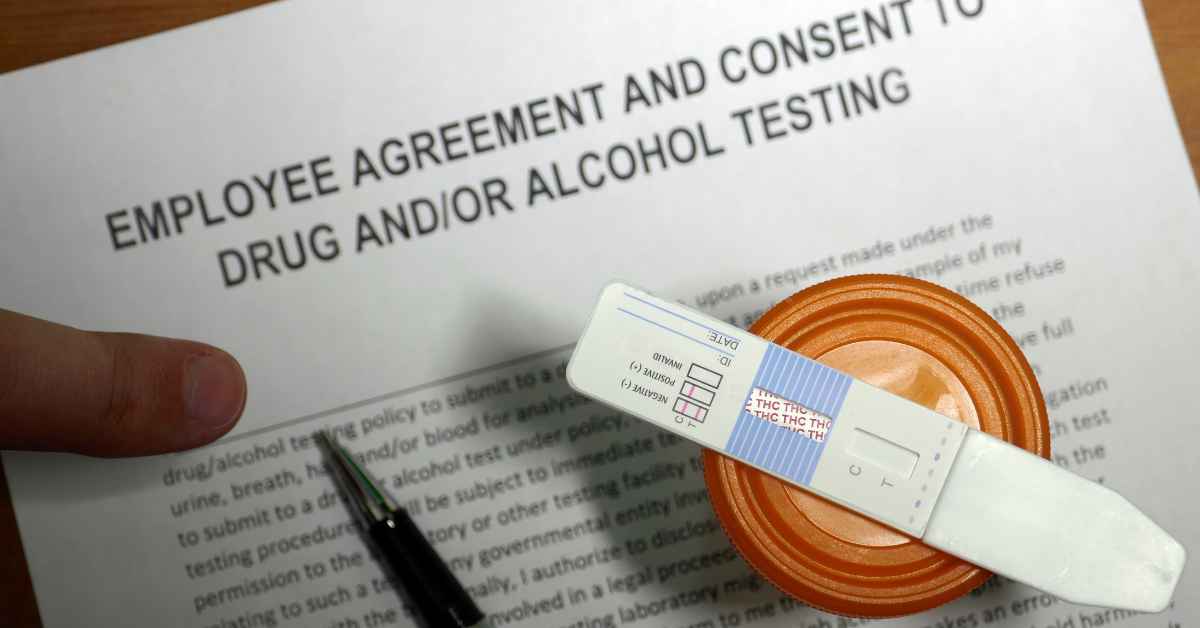
What happens on your day off does not always stay on your day off.
An employee consumed ketum during the weekend. Four days later, he tested positive during a random workplace drug screening.
He had served the company for more than 24 years.
The Industrial Court nevertheless found that his dismissal was justified.
In Mohd Rozaidi bin Abdul Razak v Elektrisola (Malaysia) Sdn Bhd [Award No. 1671 of 2026], the Court considered when a positive drug test may amount to serious workplace misconduct and why the nature of the employee’s job matters.
What Happened in the Case?
The employee joined the company in February 2000. At the time of his dismissal, he was a Senior Production Assistant responsible for polishing dies used to manufacture ultra-fine copper wire.
This was not simply a desk job.
His work required manual dexterity, sustained concentration, visual accuracy and careful compliance with product specifications.
A lapse in concentration could affect product quality and workplace safety.
Following several drug-related incidents involving employees and the company hostel, the employer conducted a random urine-screening exercise involving 27 employees from the Die Polishing Department.
The employee’s urine sample tested positive for mitragynine, the principal compound associated with ketum.
What Did the Employee Say?
According to the company’s evidence, the employee initially admitted that he had consumed ketum.
During the domestic inquiry, he maintained that he had consumed it four days before the test, while he was off duty and outside the company’s premises.
At the Industrial Court hearing, however, he challenged the testing process and denied consuming ketum.
The Court considered this later denial inconsistent with his earlier admissions.
The employee also argued that a second test should have been conducted. However, the company’s testing guidelines allowed an employee to request a repeat test on the same day, and he had not made such a request.
What Process Did the Employer Follow?
The employer did not dismiss the employee immediately after the employee tested positive.
Instead, the employer suspended the employee pending investigations, issued a show cause letter, conducted a domestic inquiry and considered the seriousness of the misconduct against the nature of the employee’s duties before finally dismissing him.
That documented process became important when the employer was subsequently required to defend its decision before the Industrial Court.
Why Did the Industrial Court Uphold the Dismissal?
The Court found that the company had proved both charges on the balance of probabilities:
- reporting for work under the influence of a prohibited substance; and
- acting in a manner prejudicial to the company’s interests or reputation.
Several factors supported the decision.
1. There was a positive test result
The employee tested positive during a random screening conducted under the company’s workplace drug-testing policy.
The Court referred to Petronas Carigali Sdn Bhd v Syamdun Tahir [2014] CLJU 835, where the High Court held that once a positive urine result is established, the evidential burden may shift to the employee to rebut that result.
The employer must still prove its case. However, an employee cannot simply ignore a properly established positive result.
2. The employee had admitted consuming ketum
The positive result was not the employer’s only evidence.
The Court also considered the employee’s admission immediately after the test and his further admission during the domestic inquiry.
His later denial at trial was treated as an afterthought.
This is an important evidential point. Employers should record material admissions accurately and give the employee an opportunity to confirm or dispute the record.
3. His job was safety-sensitive
The employee performed precision-dependent production work requiring concentration, coordination and visual accuracy.
The Court accepted that impaired judgment or motor control could affect both safety and product quality.
Section 15 of the Occupational Safety and Health Act 1994 requires an employer, so far as practicable, to ensure the safety, health and welfare of employees at work.
A positive drug test is therefore particularly serious where the employee operates machinery, drives vehicles, handles hazardous materials or performs other safety-critical duties.
4. The company had a clear policy
The employer’s written policy prohibited employees from reporting to work under the influence of drugs or other prohibited substances.
It also explained:
- why testing could be conducted;
- how employees would be tested;
- how positive results would be verified;
- when a repeat test could be requested; and
- the possible disciplinary consequences.
The policy was not merely decoration in an employee handbook. The employer could show how it operated in practice.
5. The testing was not targeted solely at the employee
The employee was one of 27 workers selected for screening.
The employer also explained the operational reasons for conducting the exercise, including earlier drug-related incidents involving employees.
This helped demonstrate that the screening was based on a genuine workplace concern rather than an attempt to manufacture a reason for dismissal.
Can Malaysian Employers Conduct Random Drug Tests?
Potentially, particularly where testing is connected to a genuine safety, health or operational concern.
DOSH has published guidelines addressing the prevention and management of drug and alcohol problems in the workplace.
However, this award should not be read as giving every employer an unrestricted right to test employees whenever it wishes.
A defensible testing programme should ordinarily be supported by:
- a clear written policy;
- a legitimate workplace purpose;
- prior communication to employees;
- objective selection criteria;
- trained personnel;
- reliable testing methods;
- proper identification and handling of samples;
- verification of positive results;
- an opportunity to request confirmatory testing; and
- confidentiality safeguards.
The more intrusive the test, the more important it becomes for the employer to explain why it is necessary and how the results will be handled.
Does a Positive Drug Test Automatically Justify Dismissal?
No.
A positive result is highly relevant, but dismissal is not automatic. The employer should still consider:
- what substance was detected;
- whether the test was reliable;
- whether the employee disputes the result;
- whether confirmatory testing was available;
- the wording of the disciplinary charge;
- the company’s policy;
- whether the employee’s role was safety-sensitive;
- whether the employee reported for duty while impaired;
- the employee’s explanation;
- previous disciplinary history;
- length of service; and
- whether a lesser punishment would be appropriate.
The employer must prove both the misconduct and why dismissal was a proportionate response.
What If the Employee Consumed the Substance While Off Duty?
Off-duty conduct does not automatically fall outside the employment relationship.
The real question is whether the conduct has a sufficient connection to the employee’s work or the employer’s legitimate interests.
That connection may exist where the conduct:
- causes the employee to report for work impaired;
- creates a workplace safety risk;
- affects the employee’s ability to perform their duties;
- breaches a lawful workplace policy;
- damages the employer’s reputation; or
- involves conduct incompatible with a position of trust.
In Mohd Rozaidi, the employee relied on the fact that he had consumed ketum during his weekend. That did not assist him because he subsequently tested positive at work and performed safety-sensitive duties.
However, employers should be careful about punishing private conduct which has no meaningful relationship with the workplace.
Must the Employee Appear Intoxicated?
Not necessarily.
The employee argued that his work, attendance and medical-leave record had not shown any problems and that he had never previously been found intoxicated at work.
The Court nevertheless accepted the positive result and his admissions.
The precise charge remains important. If the employer alleges that an employee was visibly intoxicated or incapable of working, it should produce evidence supporting that allegation.
Where the charge is consumption or a positive test contrary to an established policy, it may not be necessary to prove absenteeism, poor performance or a separate workplace accident.
Employers should therefore draft the show cause letter carefully. Prove the misconduct actually charged rather than adding unnecessary allegations that the evidence cannot support.
Practical Checklist for Employers
Before taking disciplinary action following a positive workplace drug test, ask:
- Is there a written drug and alcohol policy?
- Was the policy communicated to the employee?
- Does the policy permit the type of testing conducted?
- Was there a legitimate reason for testing?
- Was the employee selected objectively?
- Was the sample properly collected and identified?
- Was the person conducting the test trained?
- Was the result verified?
- Was a repeat or confirmatory test offered?
- Was the employee informed of the allegation?
- Was the employee given a fair opportunity to respond?
- Does the charge accurately reflect the evidence?
- Is the employee’s role safety-sensitive?
- Were mitigating circumstances considered?
- Is dismissal proportionate?
Section 14 of the Employment Act 1955 permits disciplinary punishment for misconduct after due inquiry. A proper investigation and fair opportunity to respond remain essential.
Practical Lessons for Employees
An employee who disputes a positive result should act immediately.
They should:
- record their objection in writing;
- request a repeat or confirmatory test;
- identify any medication or medical explanation;
- ask for the applicable testing policy;
- preserve correspondence and test documents;
- respond carefully to the show-cause letter; and
- avoid making inconsistent statements.
An employee who waits until trial to dispute a result previously admitted or left unchallenged may face an obvious credibility problem.
Final Thoughts
The lesson from Mohd Rozaidi is not that every positive drug test gives an employer an automatic right to dismiss.
The dismissal was upheld because the employer could show much more than a line on a test kit.
There was a written policy, a genuine safety concern, a documented testing procedure, a positive result, repeated admissions, a show cause process, a domestic inquiry and a safety-sensitive role.
For employers, the takeaway is straightforward: workplace safety concerns must be managed through clear policies, reliable evidence and a fair disciplinary process.
For employees, what happens during the weekend may still become a workplace issue if its effects follow you to work on Monday morning.
For further guidance on workplace misconduct, domestic inquiries and unfair dismissal claims, explore Employment Law Malaysia: The Complete Guide for Employees and Employers (2026).
This article provides general information and does not constitute legal advice. Industrial Court awards are fact-specific, and each matter should be assessed according to its evidence, workplace policies and surrounding circumstances.